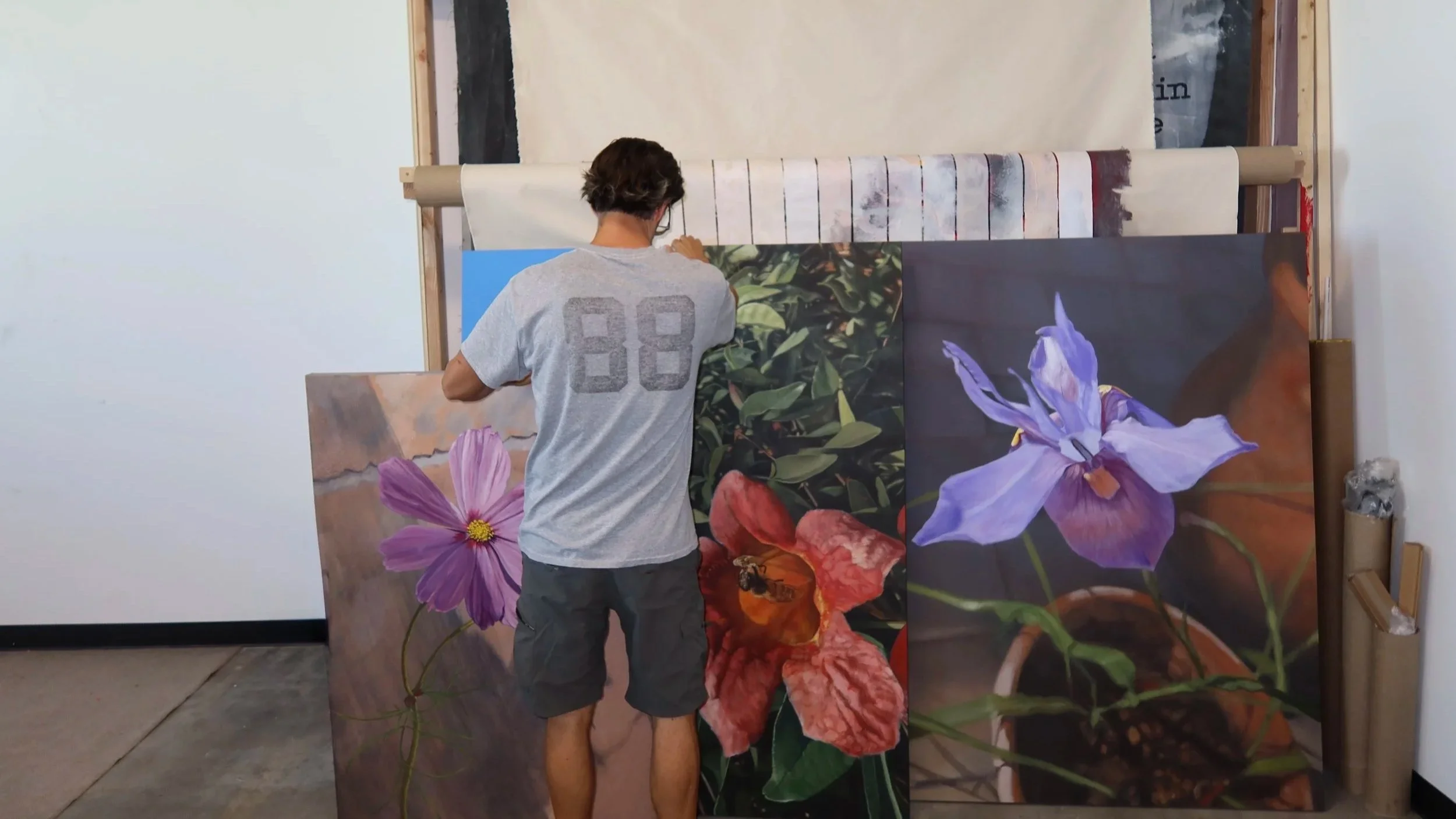
In this first series, I paint backgrounds…then I paint flowers. It’s why the paintings are named after the background. My goal is to present some of nature’s most beautiful elements in front of a scene that may be unnatural, or somewhat chaotic, or seemingly mundane, or often overlooked, or a combination of these. The composition is meant to be challenging, both for me as the artist and, ultimately, for the viewer.
I paint these blossoms in their found environments to question what factor those surroundings have in either complementing or detracting from the conventional beauty of the flower. So I find myself squatting in a parking lot to get a close up shot of the tiny flower growing out of the crack of a curb. I remark not only at nature’s resilience but at the chance it gives us, however ephemeral, to experience its accomplishments. Although, I admit that I sometimes lose sight of the real nature of the flower, the reason it catches the eye, its crucial role in our ecosystems. The colors and structures of these blooms are calling for the attention of the world’s pollinators…yet it works on me, too. Ultimately, for me to truly be inspired, the “where” also matters; the composition must hold true to the series’ campaign.
The composition that I consider the original inspiration for this series illustrates these concepts well. For years, I have contemplated a photo that I took while waiting in a small garden area that served as outdoor seating at an oil change garage. The photo ultimately became the piece, “AutoCare 2000.” All of the works in this series are either done from life or from my own photos (or sometimes photos that my wife or team has taken).
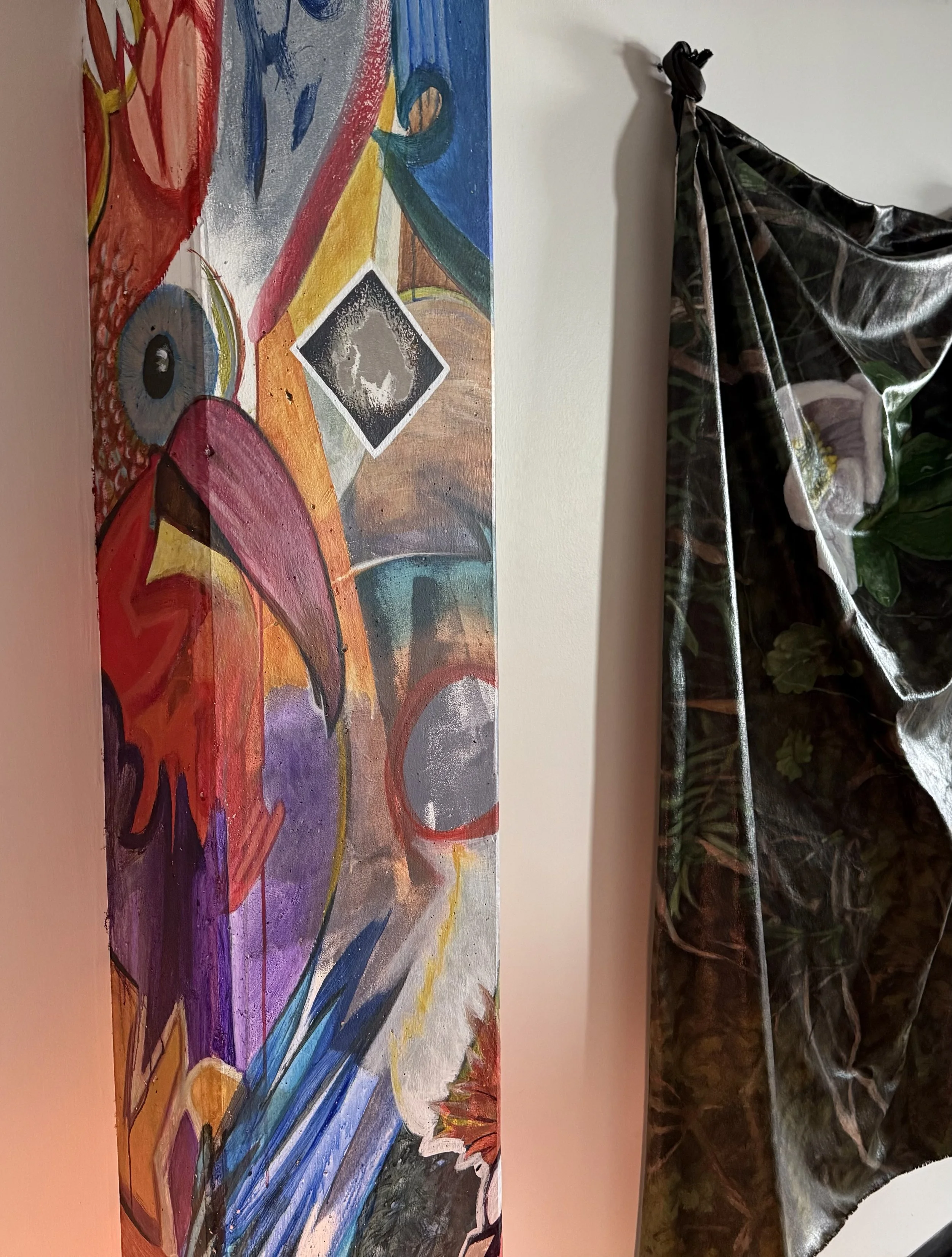
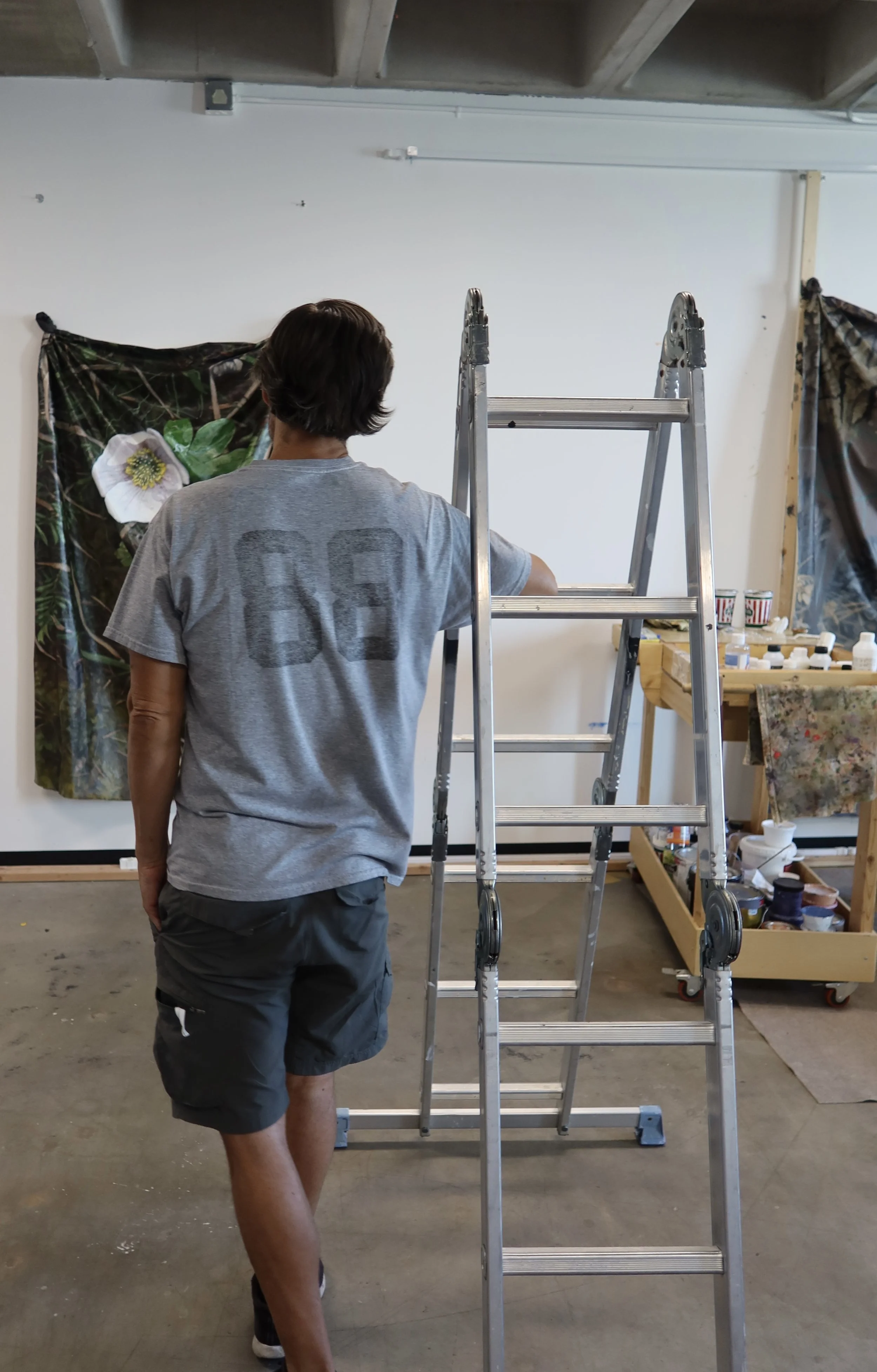
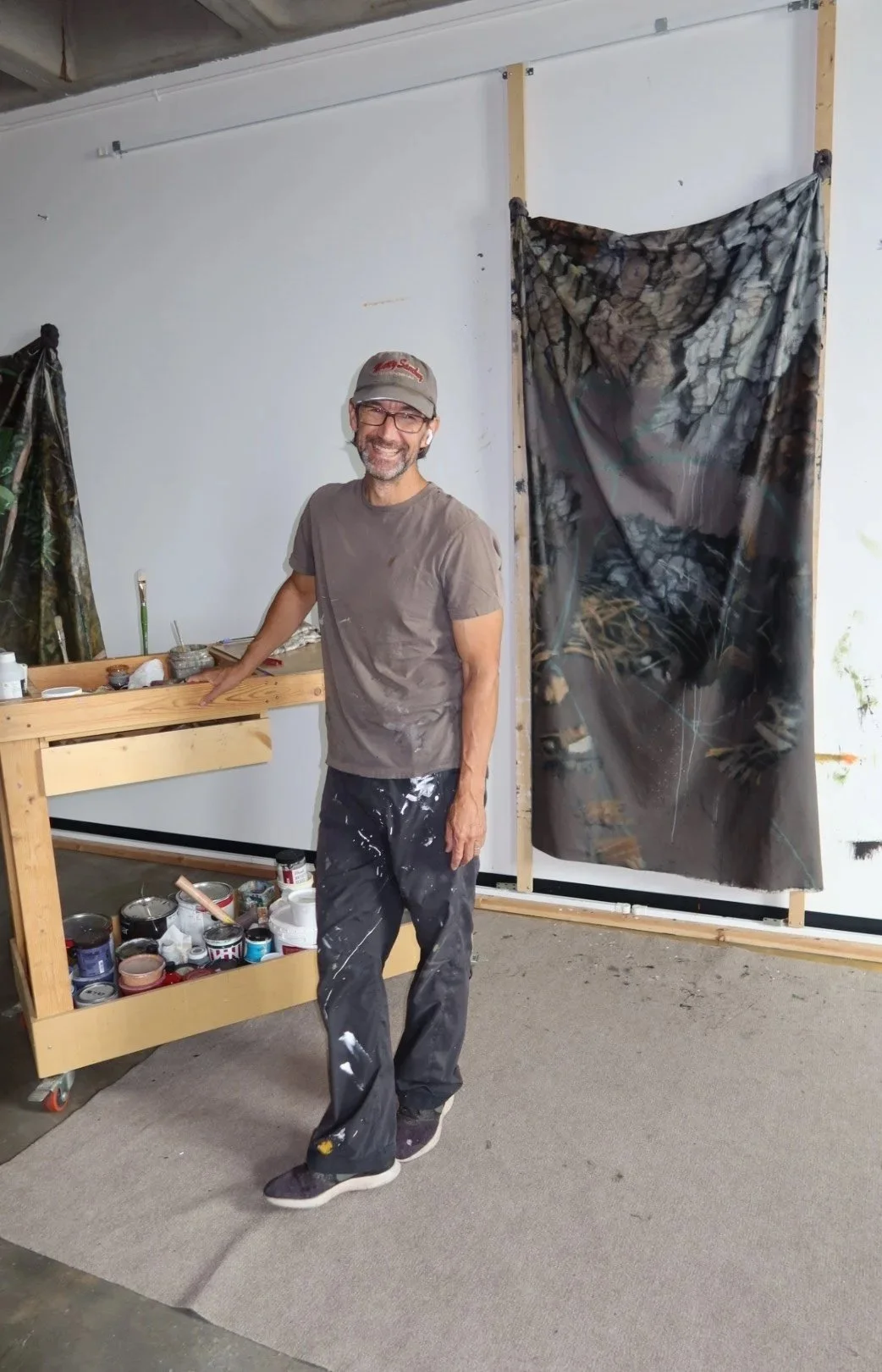
Additionally, I have begun to bring an older concept of mine to this series in the form of paintings on loose/unstretched canvas. Such pieces are also meant to offer challenges, certainly for me in terms of the added difficulty in working on a surface that is not flat, and for those who are used to experiencing a painting in a strictly two-dimensional presentation. I am intrigued by the task of embracing and incorporating the undulations of the fabric while simultaneously manipulating lines and shadows in an effort to minimize the distortion of select aspects of the painting. Primarily, however, the unstretched pieces are meant to challenge the formality of art. My original loose canvas work was done in college, when I was more rebellious, but the sentiment of questioning some element of established art norms has stayed with me.
In terms of anarchist artists, I am no Marcel Duchamp. As an elementary teacher in a Montessori school for nearly two decades, I would often begin a year of teaching art by showing the students pictures of historical works, including Duchamp’s “Fountain.” We discussed “what is art?” and who gets to decide. As usual, the kids were incredibly insightful and honest, and I continue in my current pursuits as a professional artist to be inspired by them and what we learned together.
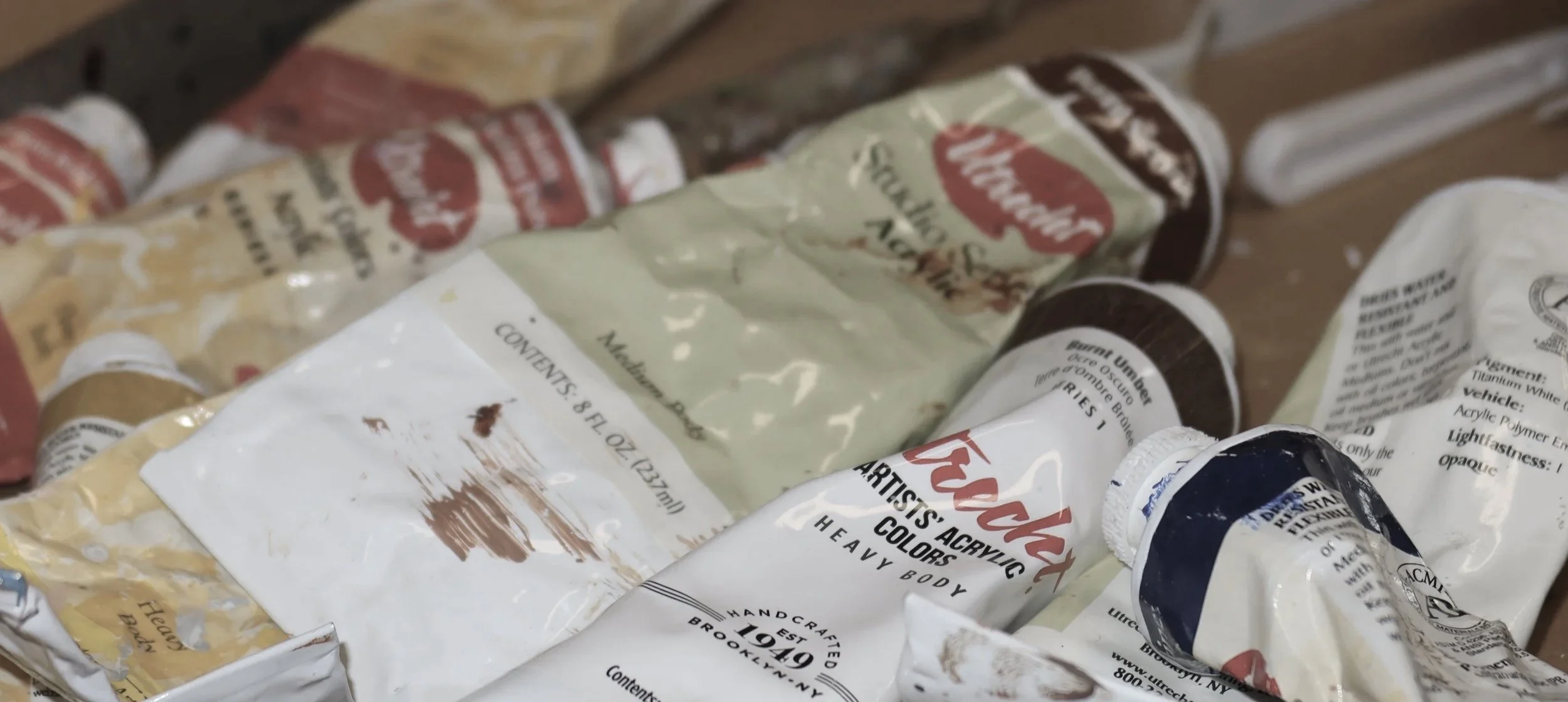
I paint with acrylics mainly because I got used to them when I was a muralist (before I was a teacher). Before murals, I used to love shoving oil paints around, and while the quick-drying acrylic paint is less conducive to this extended manipulation, I find an extra challenge in trying to work faster. I believe it yields better results. So my “shoving” has often turned more into “scrubbing,” yet the ease of building layers can make up for the diminished forgiveness.